
Introduction
In recent years, the concept ofhuman entanglementHe captured the imagination of scientists, philosophers and technology enthusiasts. The idea that two or more people can connect deep and invisiblely, as happens between subatomic particles, is generating new questions about the functioning of the mind, consciousness and reality itself.
The term "entanglement" was born in the context of quantum physics, but its meaning began to expand towards human and relational areas. One wonders if there is a form of connection between human beings that goes beyond verbal or visual communication, an invisible sort of bond that unites two minds or consciences instantly.
This suggestive hypothesis, which feeds on science but also of ancient intuitions, opens a new frontier in the relationship between man and technology. Explore what really ishuman entanglementIt requires a multidisciplinary journey between physics, neuroscience, philosophy and spirituality, with a look projected towards emerging technologies that could translate the invisible into measurable data.
Summary
- 1 Origins of the concept of entanglement in quantum physics
- 2 From the subatomic world to the human being: how the idea of human entanglement was born
- 3 Human entanglement and connections between minds: what science says today
- 4 Human entanglement and technology: towards new connection interfaces
- 5 Spirituality, collective consciousness and the border between science and metaphysics
- 6 Concrete applications and possible future scenarios
Origins of the concept of entanglement in quantum physics
The term "entanglement" is introduced by Erwin Schrödinger In the 1930s, to describe a paradoxical quantum phenomenon. Two particles, even if separated by immense distances, seem to behave as if they were still connected: an instant modification of the state of one causes one change in the state of the other.
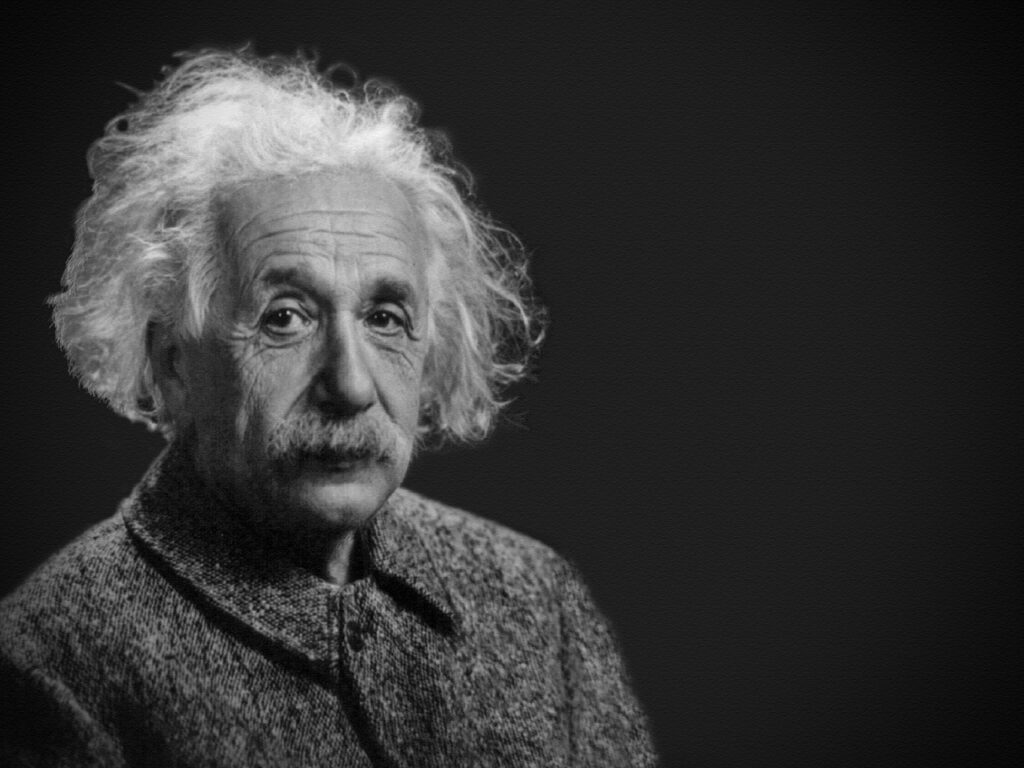
This behavior challenges the limits of classical physics and human intuitions on space and time. Albert Einstein He defined it with a tip of skepticism "distance spectral action", because it contradicted the principle according to which nothing can travel faster than light.
The EPR paradox, formulated in 1935 by Einstein, Podolsky and Rosen, tried to demonstrate that quantum mechanics was incomplete. However, the experiments conducted in the eighties by the Alain Aspect physicist showed that the correlations provided for by quantum theory actually occur.
These discoveries have sanctioned the non -local character of reality on a quantum level. The entangled particles do not communicate with each other, but seem to exist in a unified state, which manifests themselves simultaneously wherever they are.
Starting from these bases, it has begun to speculate on the idea that even complex biological systems, such as the human brain, can exhibit behaviors similar to those of the entangled particles. And it is precisely from here that the concept ofhuman entanglement.
From the subatomic world to the human being: how the idea of human entanglement was born
The possibility that entanglement can manifest itself on a human level is a hypothesis that moves on the wire between science and philosophy. Some scholars believe that consciousness, as an emerging phenomenon, can be connected to quantum dynamics yet not entirely understood.
The neurophysiologist Karl Pribm and the physicist David Bohm have proposed a holographic vision of the brain, where reality itself is interpreted as a global quantum structure. According to this perspective, the minds could be connected through a unified field that transcends physical location.
The study of brain waves also provided interesting clues. In certain conditions, such as during deep meditations or flow states, synchronies are observed among the neural patterns of close people, even if they do not communicate with each other. Some interpret these phenomena as primitive forms ofhuman entanglement.
Other authors have gone further, assuming that strong emotions, such as love or trauma, can create invisible connections between individuals. These connections could manifest themselves in sudden empathy, premonitions or shared sensations, which seem to escape conventional explanations.
The concept of human entanglement is thus enriched with suggestions that come from different disciplines: quantum physics, neuroscience, transpersonal psychology and mind philosophy. However, science requires measivity, repeatability and rigor, and for now these connections remain largely not verifiable.
Human entanglement and connections between minds: what science says today
Despite the absence of final tests, numerous research has tried to explore whether and how a form of direct connection between brains can exist. One of the most studied phenomena is brain synchronization, observed above all in social contexts, such as concerts, rituals or collaborative activities.
When two people interact deeply, their brain waves tend to synchronize. This phenomenon, known as "neuroentrainment", has been observed through the use of the electroencephalogram (EEG) and functional magnetic resonance imaging (FMRI). It is not yet a question ofhuman entanglementIn the strict sense, but shows that minds can connect beyond explicit communication.
Another field of research concerns homozygous twins. Many anecdotes report experiences of instant empathy or "twin telepathy", but science struggles to replicate these phenomena in the laboratory. However, some studies, such as those published onFrontiers in Human Neuroscience, have shown correlations that cannot be explained between brain responses of distant subjects.
Experiments conducted at theNoetic Sciences InstituteThey tried to demonstrate mental connections between people in a deep meditative state. Although the results are fascinating, large scale replications and shared scientific approvals are still missing.
The question then remains open: thehuman entanglementIs it just a fascinating metaphor, or are we just starting to discover the potential of the human mind? The boundaries between what is possible and what is verifiable are slowly moving.
Human entanglement and technology: towards new connection interfaces
The advent of new technologies is bringing the idea of human entanglement on a more concrete plane. Some experiments have already demonstrated the possibility of directly connecting two brains through digital interfaces. We talk aboutbrain-to-run interface(BBI), a technology still at the beginning but with a revolutionary potential.
In 2014, a team from the University of Washington conducted an experiment in which two people managed to convey a brain signal through the internet. One of the participants thought of an action, the other performed it, thanks to a transcranial magnetic stimulation system.
These interfaces could one day allow a form of "telepathic" communication, albeit mediated by technology. It is a new dimension of the concept ofhuman entanglement, in which the link between minds is no longer just a philosophical hypothesis, but an engineering project.
Some workshops, such as those of Mit and Darpa, are developing collective neural communication systems, also known as "brain -net". In these scenarios, more brains collaborate on the same task, creating a sort of interconnected collective mind.
These developments also raise deep ethical questions. Who controls access to these connections? What happens to mental privacy? What if emotions or thoughts could be shared or manipulated at a distance? The line between collaboration and control becomes increasingly thin.
Spirituality, collective consciousness and the border between science and metaphysics
L 'human entanglementIt recalls ancient concepts, often relegated to spirituality. Oriental traditions such as Buddhism or Hinduism have been talking for millennia of interconnection among all living beings. Western philosophy, from Plato to Jung, also explored the idea of a collective unconscious or a soul of the world.
The Fritjof Capra physique, in his book "The Tao of Physics", has traced parallels between the discoveries of modern physics and the visions of oriental philosophies. These convergences suggest that entanglement is not only a scientific phenomenon, but also a key to understanding our place in the cosmos.
Even the theories on the "morpho camp" proposed by Rupert Sheldrake, albeit controversial, explore the idea that there are information fields shared by species, groups or related minds. Although not accepted by the scientific community, these theories continue to stimulate research.
Today there is a growing opening to an integrated approach, which does not separate science and spirituality, but consider them two different languages to explore the same reality. THE'human entanglement, in this perspective, could be the manifestation of a wider reality, where consciousness, information and matter are intimately intertwined.
Concrete applications and possible future scenarios
The idea of human entanglement could lead to future developments in different areas. Some hypothetical scenarios include:
- Educational systems based on shared brain connections, for instantaneous transmission of knowledge
- Psychological therapies that exploit mental alignment between therapist and patient
- Neural communications in high critical environments, as in space or military missions
- Interfaces between artificial intelligence and human mind for evolutionary co-densiero
- Networks of collective consciousness in virtual environments
These scenarios, still far away, could one day redefine the interaction between human being and information.
The concept ofhuman entanglementIt represents one of the most fascinating and controversial borders of contemporary thought. It was born from quantum physics, but expands towards biology, technology, spirituality and philosophy.
Today, science still does not have enough tools to demonstrate its existence, but intuitions, emerging data and technological developments suggest that we are at the beginning of a new paradigm.
Understand if human minds really can connect beyond the limits of space and time, it could not only revolutionize science, but transform the way we conceive ourselves, the relationships and the entire fabric of reality.